Knowledge Hub
 AWS Amplify
 Azure Static Web Apps
 Begin
Begin Cloudflare Pages
 Deno Deploy
 Digital Ocean App Platform
 Firebase
 GitHub Pages
 Heroku
 Kinsta
 Layer0
 Netlify
 Render
 Vercel
What is Vercel: The Best Hosting and Deployment Solution?
What is Vercel: The Best Hosting and Deployment Solution?
Written by Mariola Wojcik
Last update: 5/16/2025
Introduction
Vercel is a popular cloud platform for deploying, previewing, and scaling front-end frameworks and static sites. It is especially recognized for its comprehensive integration with Next.js - a leading framework for React applications - and offers robust support for other popular front-end frameworks including Astro, Nuxt.js, and SvelteKit. The platform provides essential tools and infrastructure needed to build and deploy web applications efficiently. At Bejamas we frequently use Vercel in our projects, so let’s delve deeper into this topic.
Current State
Vercel serves a wide range of users, from individual hobbyists to large enterprises, enhancing the development experience for modern web applications. The platform simplifies deployment processes through features like automatic scaling, global distribution, and performance optimizations, making it suitable for startups, SMBs, and large corporations alike.
From our perspective, the most valuable features are:
- Great developer experience, such as instant git integrations, automatic previews for every push, and zero-configuration deployments allow developers to focus more on coding and less on setup. This seamless integration with development workflows greatly aids in iterative development and continuous integration practices.It's important to note that great experience has its price - Vercel is one of the more expensive options out there.
- Extensive ecosystem and integrations - Vercel integrates with numerous third-party services and tools, facilitating a comprehensive ecosystem that extends its functionality. This includes control platforms like GitHub, GitLab, Bitbucket, collaboration tools such as Slack and Jira and content management systems including Contentful and Sanity, among others.
- Support for modern development frameworks - in addition to its native support for Next.js, Vercel supports a variety of modern development frameworks like React, Vue, Angular, Svelte, and more. It enables developers to use the platform regardless of their chosen technology stack.
- Serverless functions support - which allows developers to write back-end code that runs in response to events, without maintaining a full back-end server. These functions can be written in multiple languages and are seamlessly integrated with the front-end, enabling complex applications to be built entirely on Vercel’s platform.
- Security features - which include automatic HTTPS and environment variables for secure key management. Vercel supports role-based access control (RBAC), enabling teams to define and manage who has access to specific resources within the project, which can reduce risks associated with unauthorized access or accidental changes. The platform also provides automatic protection against Distributed Denial of Service (DDoS) attacks, which helps secure applications from malicious attempts to disrupt service availability, ensuring uptime and consistent performance.
Future
Vercel appears very promising due to its commitment to optimizing the web and pioneering innovative solutions such as React Server Components (RSC), Partial Prerendering (PPR) or streaming. These features make web applications more efficient, faster, and more scalable.
The platform constantly evolves with new changes and functionalities added several times a month. To stay updated, follow their changelog and blog.
Look & Feel
Vercel’s user interface is clean and intuitive to use. The interface provides a smooth navigation experience, allowing users to intuitively manage projects, deployments, and settings. You can easily deploy your website, see the deployed branch for the Production or Preview environment, run and test serverless functions, add environment variables, and much more.
Vendor Lock-in & Migration
Vercel is particularly optimized for Next.js, which it supports natively and extensively. While Next.js can be deployed on other platforms, the seamless integration and performance optimizations on Vercel can make migrating to another service seem less appealing due to potential drops in performance or loss of specific features.
Deployment configurations, such as vercel.json, are specific to Vercel’s deployment pipeline. Moving to a different platform might require significant reconfiguration or changes in the deployment setup, adding overhead to the migration process. Alternative platforms might include Netlify, AWS Amplify, or traditional cloud services like AWS, Azure, and Google Cloud.
Pricing Structure
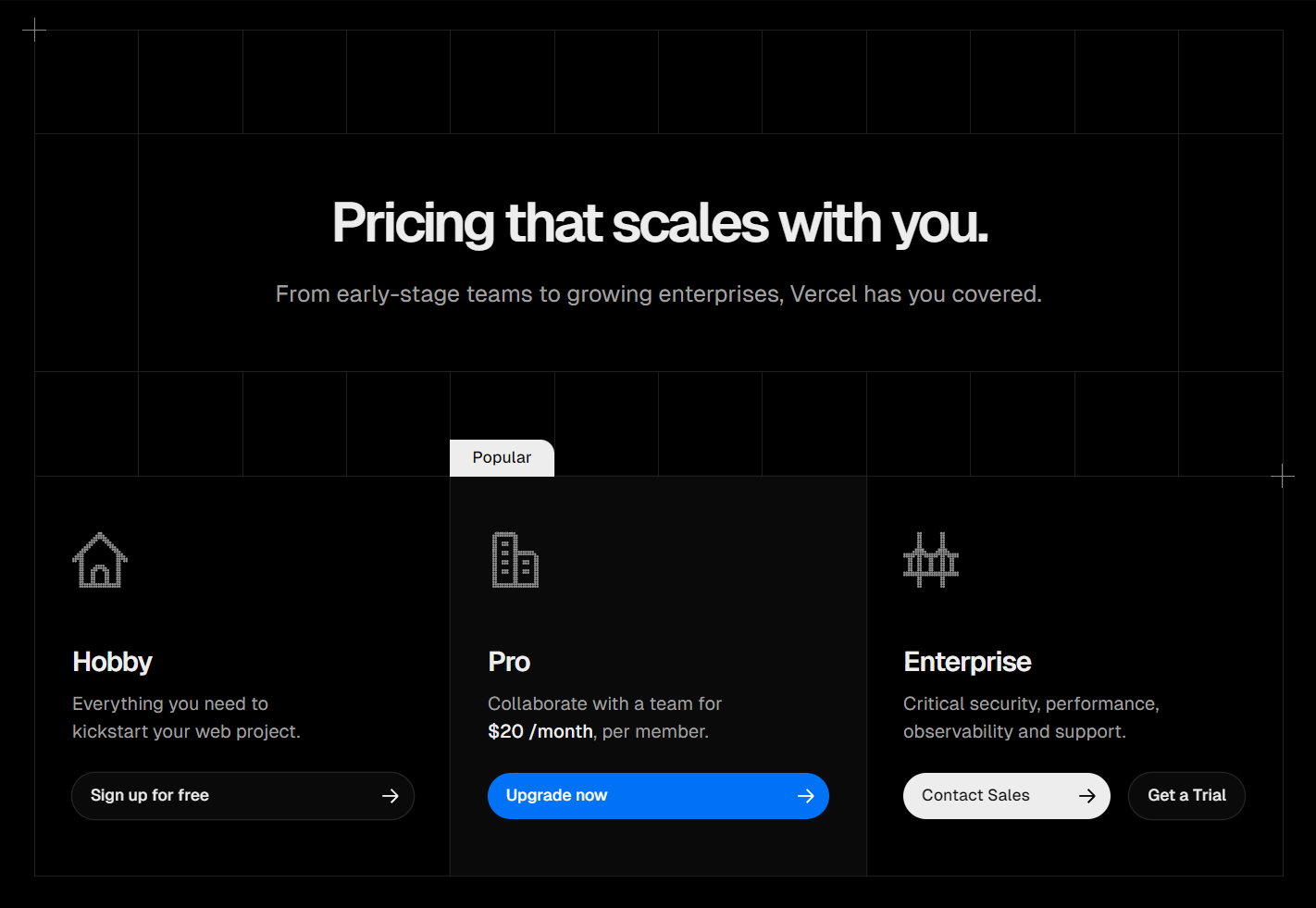
Vercel's pricing structure accommodates a wide array of users with its tiered pricing model, featuring free and paid plans that vary in features, performance, and scalability.
The free Hobby plan is ideal for personal projects and small-scale applications, while the Pro plan is tailored for professionals and small teams.
The Enterprise plan is customizable for large teams requiring advanced features such as higher performance capabilities, additional team management tools, and dedicated support.
Details on each plan, including infrastructure use and potential additional fees, are available at Vercel pricing page. Vercel offers a Spend Management tool to manage and monitor infrastructure spending, allowing for notifications via email, web, and SMS as you approach defined spending limits. Customizable plan options with Pro add-ons are also available, such as the Speed Insights add-on, which provides detailed performance metrics for $10/month per project.
At Bejamas, we most often use the Pro plan, noted as the most popular on Vercel’s website. Depending on the project's needs and the number of developers involved, we adjust the number of user accounts monthly, paying only for the specific number needed. This flexibility is crucial for managing dynamically changing teams and project requirements efficiently.
Support
If there are any issues or specific needs, Vercel’s customer support is readily available. Vercel’s documentation and community guides offer substantial help, and dedicated Discord channels are available for framework-specific discussions. On a paid plan, users have access to more direct support channels - issues can be addressed by submitting a ticket to Vercel’s support team.
Conclusion
Vercel stands out as a powerful cloud platform that excels in deploying, previewing, and scaling modern web applications, particularly through its deep integration with Next.js and robust support for other leading front-end frameworks. It boosts productivity through seamless git integrations and zero-configuration setups, supports a variety of modern development frameworks, and integrates with numerous third-party tools. Its ongoing updates and feature additions promise to keep it at the forefront of development technology.
Use cases
- Next.js apps.
- Static Websites. Vercel works with every Static Site Generator.
- Serverless functions and apps.